
Youth Mental Health Summit: Richmond Event Recap
The Coalition to Empower our Future (CEF) recently partnered with Punchbowl to host the Youth Mental Health Summit in Richmond, Virginia, featuring state lawmakers, community program leaders and parent perspectives in discussions surrounding the complexity of the youth mental health challenge and recent progress made to address youth wellbeing in the digital age.
The summit focused on the importance of empowering parents, teachers, community leaders and mentors with the tools they need to help young people access mental health resources and establish strong support systems to meet the challenge. Across all panels, speakers also discussed the recent landmark agreement between the states and Meta to implement online protections for teens and more tools for parents, the importance of other platforms joining the effort to keep kids safe online and how states can leverage resources from the agreement to bolster youth programs and resources.
CEF was represented by Board Member Dr. Caroline Carney, a board-certified internist and psychiatrist, who participated in a fireside chat with Punchbowl News Managing Editor Heather Caygle. Carney emphasized the importance of mental health education and digital literacy for both young people and their parents to understand the comprehensive nature of youth wellbeing.
Caygle and Carney also discussed the agreement between the states and Meta, in which Carney stressed that she is “optimistic that with the settlement, money will come into states” and urged “other platforms to come in and raise their hands – YouTube, Snapchat, TikTok – need to be a part of this,” and expressed “hope that the settlement funds go to supporting the community and third spaces that give kids that space for interaction and growth.” Carney highlighted recent CEF polling that found that more than 80 percent of parents want other platforms to join Meta in establishing new safeguards for young people online.
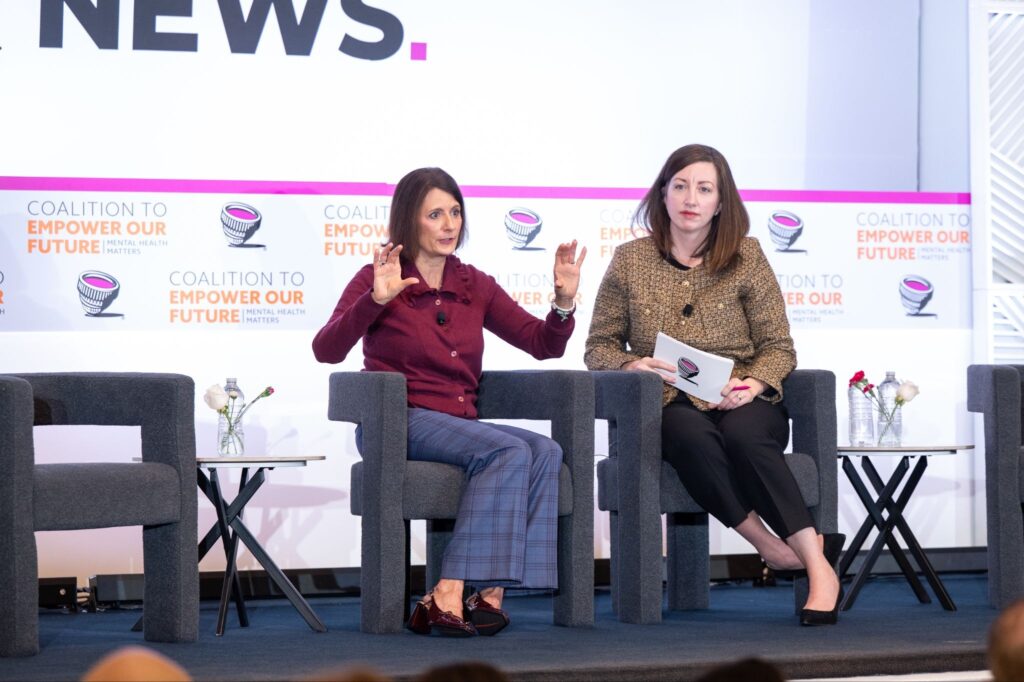
Carney also previewed CEF’s Youth Mental Health and Wellbeing Pyramid, explaining what parents define as a “balanced, holistic” life for young people, saying, “Social interaction with family and friends, sleep, a good diet, that kind of foundational work, children need. The next layer, children need outdoor time and organized activities, which are foundational to being healthy … and at the top, limited amounts of social media, which is a good thing.” Derived from parent input and new nationwide research, the Youth Mental Health and Wellbeing Pyramid outlines the building blocks that contribute to a healthy, balanced life for young people, and will be released in the coming weeks.
Another panel featured a discussion with Virginia State Senator Creigh Deeds (D-11) and Virginia State Delegate Marcia Price (D-85), leaders of Virginia’s Behavioral Health Commission, where they discussed legislative approaches to the youth mental health challenge and how Virginia can ensure the funding from the agreement with Meta is used in ways that expand and enhance youth programs across the state. When asked by Caygle, “The way the settlement was structured, there was encouragement for other platforms to also contribute. Do you expect that to happen? Would you like to see that happen?,” Deeds noted that he hopes other platforms join Meta in establishing new protections for young people online, adding that “I think the attorney general is working on it right now … This is an urgent issue, and we’ve got to find ways to put that money in the right ways and use it as an incentive to do more to protect our children.” Price added that, “Youth mental health can’t be [solved by saying], ‘It’s this one thing, we cleared it,’… and my congratulations to Attorney General Jay Jones for [joining the settlement].”
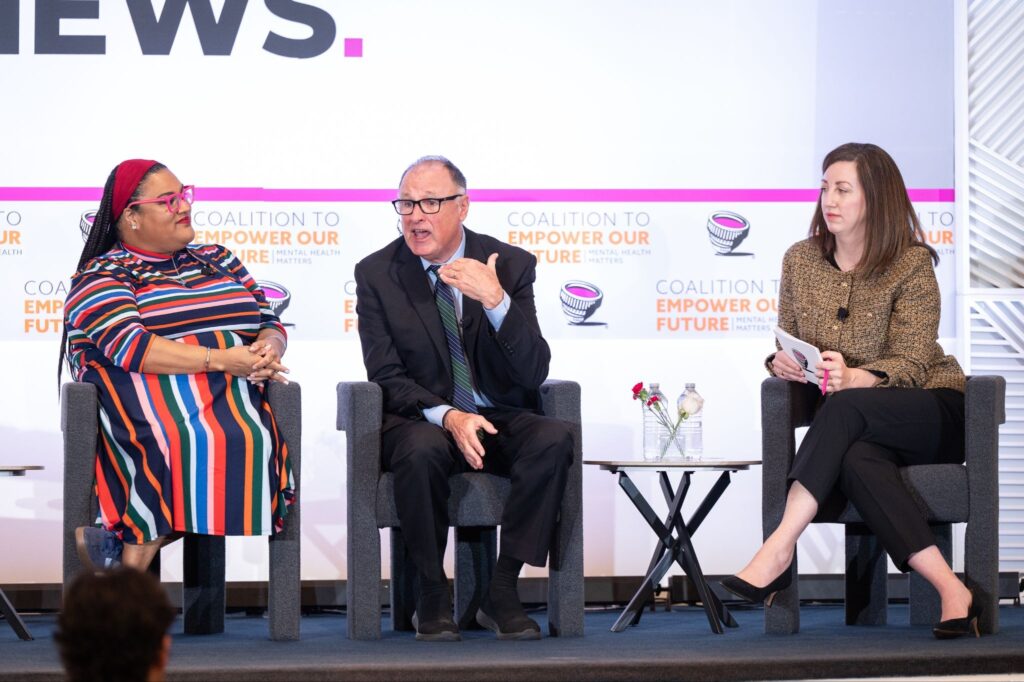
The final panel of the event brought together leaders of community programs and youth-focused nonprofits, including CEO of Girl Scouts of the Commonwealth of Virginia Megan O’Neill, CEO of Voices for Virginia’s Children Rachael Deane and Programs Director for the Blue Sky Fund Josh Bearman. The panelists discussed the hands-on approach their programs take to addressing youth wellbeing challenges and noted the importance of empowering parents and mentors with the appropriate tools and resources to address the challenges young people face.
Bearman echoed Dr. Carney’s earlier comments on the valuable role technology can play in young people’s lives, noting that his organization teaches children to utilize technology in meaningful ways. “We support intentional use of screens, like there’s a great app we use if we’re on a hike and we see a bird to identify what kind it is,” Bearman said. “It’s not that [technology] shouldn’t be used at all, it’s that it has valuable usage.”
Panelists also expressed their hope that the impactful funding from the agreement with Meta can be used to support third spaces and after-school programs for children, with Deane noting that “[the settlement funds should support] prevention. That money should go to fund out-of-school time and programs that are enriching and building the confidence and resilience of children, funding in our schools to address social and emotional learning, digital literacy.”

The summit was an important gathering of perspectives surrounding the youth mental health challenge and the various comprehensive ways to address youth wellbeing. Panelists stressed the significance of the recent agreement between the states and Meta and how the funding stemming from this agreement can serve young people in Virginia and across the country, bolstering resources for mental health programs, after-school activities and digital literacy education.
While social media and technology safety is only one piece of the youth wellbeing puzzle, parents and experts agree that the latest protections put forth by the states and Meta are an important step forward in creating comprehensive and long-lasting solutions to the youth mental health challenge. To build on that progress, other platforms where young people spend their time, including YouTube, Snapchat and TikTok, must also adopt similar safeguards so that families can count on consistent protections no matter which app their children are using.
CEF is grateful for the wide range of voices that participated in the Richmond summit and hopeful that continued conversations such as these will drive the hard work we need to address this challenge and provide holistic solutions to support young people.
Watch the full forum here.
###