
The State of World Happiness in 2026 Recap
The Coalition to Empower our Future (CEF) was honored to be represented by Carson Domey at Semafor’s annual State of World Happiness event and launch of the 2026 World Happiness Report. Domey is a student at the University of Texas at Austin and executive director of the Coalition for Student Wellbeing, a CEF member organization.
Convening experts in research, policy, media and technology, the event featured conversations about mental health and wellbeing. Speakers examined how mental health is central to overall happiness and explored comprehensive solutions for young people, emphasizing community support, building resilience and creating connection and belonging. Understanding that every young person is unique, the importance of taking a holistic approach to wellbeing was echoed throughout the event.
Many panelists also highlighted the unintended consequences of overly narrow approaches to the youth mental health challenge, which could fail to address the importance of strengthening belonging and relationships.
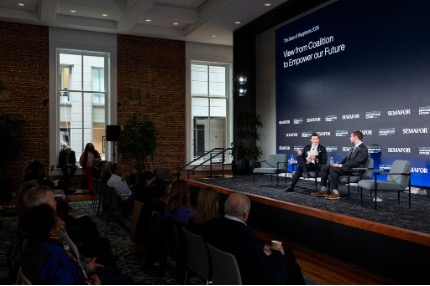
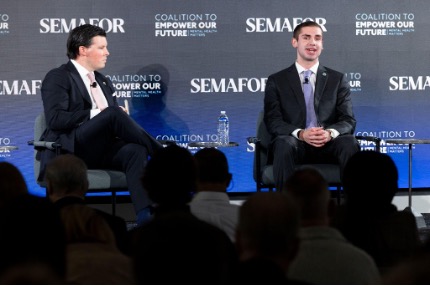
Domey’s conversation focused on the importance of incorporating youth voices in discussions on youth mental health and the need for comprehensive solutions to address the complex challenges kids are facing today. Andrew Friedman, general manager and head of public affairs for Semafor, led the conversation in which Domey spoke from his unique perspective as a student leader, observing the complex challenges among his peers while navigating them personally as well.
When speaking about comprehensive solutions, Domey highlighted the importance of media literacy for youth wellbeing, pointing to one of CEF’s member organizations, Media Literacy Now, saying, “They do an excellent job of equipping families and educators with the tools, knowledge and resources young people need to navigate the digital world, build a healthy relationship with social media and foster meaningful connections.”
Domey and several other panelists also emphasized that his generation is growing up in an increasingly digital environment, making it essential for conversations about youth wellbeing to focus on practical tools and education that encourage positive and balanced technology use. “Phones are undoubtedly part of the conversation … but I also think there are so many opportunities to leverage social media and technology if we’re able to harness it right,” Domey added.
When it comes to a comprehensive approach to supporting mental health and wellbeing, Jennifer Wallace, journalist, author and founder of the Mattering Institute, noted that we “do a disservice to the [mental health] conversation by making it so narrow on social media … our relationships are fraying, our communities are fraying, our lack of social trust – there are so many more factors going into it besides social media.” Manoush Zomorodi, journalist, author and host of NPR’s TED Radio Hour, highlighted a statistic from the World Happiness Report that showed belonging has six times the effect on teen wellbeing than reducing social media does.
This perspective also led to a broader discussion about solutions and creating opportunities for community and connection to support youth mental health. Alise Marshall, senior director of corporate affairs and impact at Pinterest, stressed that supporting youth wellbeing is a “whole-of-society endeavor.”
Many of the panelists discussed the key roles community, after-school programs, mentorship, sports teams and similar spaces play in youth wellbeing. These approaches already exist and are working to support young people by meeting them where they are. By equipping parents and families with practical tools and strengthening community programs that foster belonging, we can ensure young people receive the comprehensive support they need for their overall happiness and wellbeing.

Watch Domey’s full remarks at Semafor’s State of World Happiness in 2026 here.
###