
Youth Wellbeing Forum: Building Resilient Generations Recap
The Coalition to Empower our Future (CEF) recently partnered with Semafor to host the Youth Wellbeing Forum, featuring mental health experts, current and former lawmakers, community program leaders and more to discuss the complex factors driving youth mental health challenges and the solutions needed to address them.
The forum, titled “Building Resilient Generations,” focused on the importance of equipping young people, their families, mentors and educators with practical tools, such as digital literacy education, mental health resources and stronger support systems to help them thrive well into adulthood. It reinforced the importance of a comprehensive approach to youth wellbeing that builds on recent progress around online safeguards, while recognizing that technology is one piece of the puzzle and that meaningful investments in tools for parents and communities also remain critical.
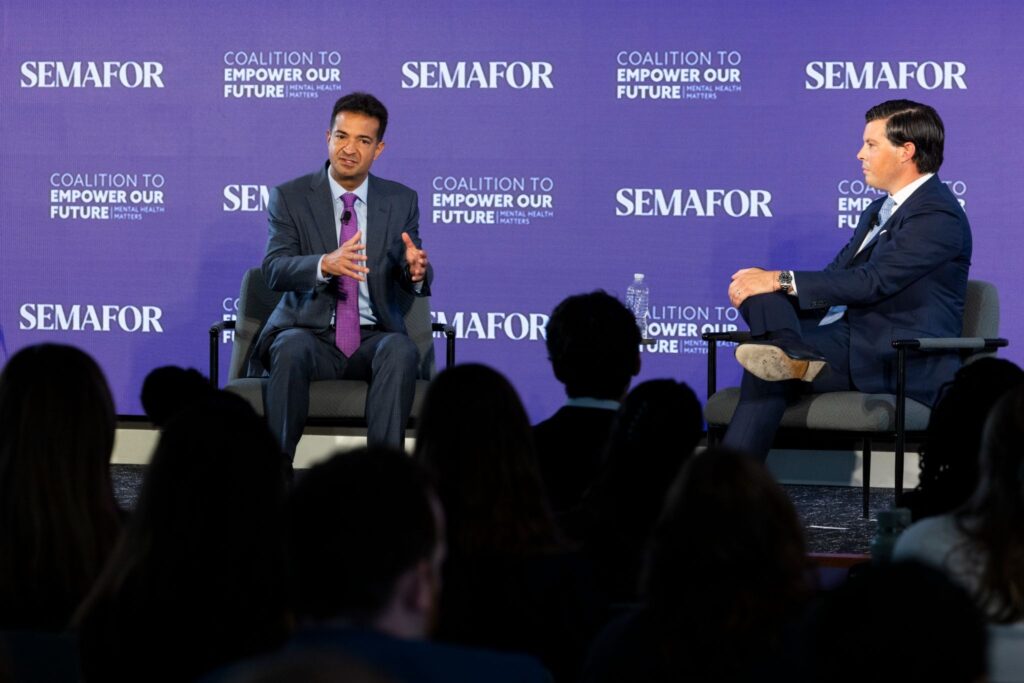
CEF was represented by board member and former U.S. Representative Carlos Curbelo, who discussed the state of youth mental health and the recent progress on social media protections.
Curbelo highlighted the recent agreement between the states and Meta that launched landmark new safeguards for young users online as an example of progress toward balancing young people’s access to technology with appropriate protections and parental tools. He also stressed that the agreement should not be viewed as a finish line and called for similar safeguards to be adopted across social media platforms so young people do not “fall through the cracks” as they move between apps. Curbelo emphasized that technology is one factor of many affecting youth wellbeing, pointing also to family environments, schools, economic pressures, bullying, food insecurity, homelessness and access to extracurricular activities, among other factors.
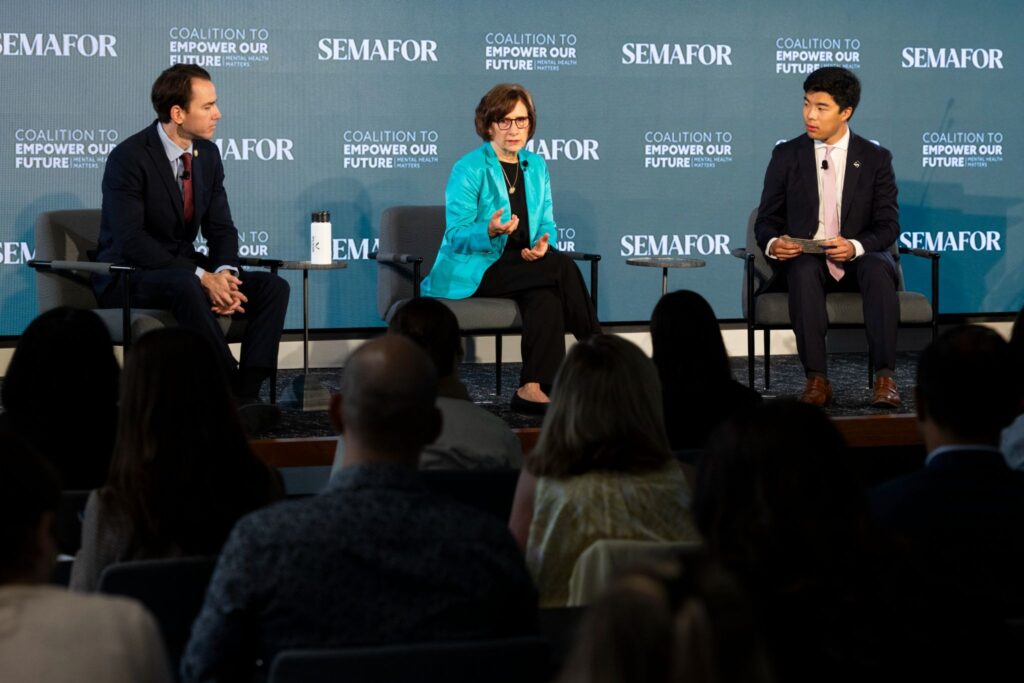
Another panel featured a discussion with U.S. Representatives Kevin Kiley (I-CA) and Suzanne Bonamici (D-OR), co-chairs of the U.S. House Subcommittee on Early Childhood, Elementary and Secondary Education, where they discussed legislative approaches to the youth mental health challenge and the role of education in young people’s lives.
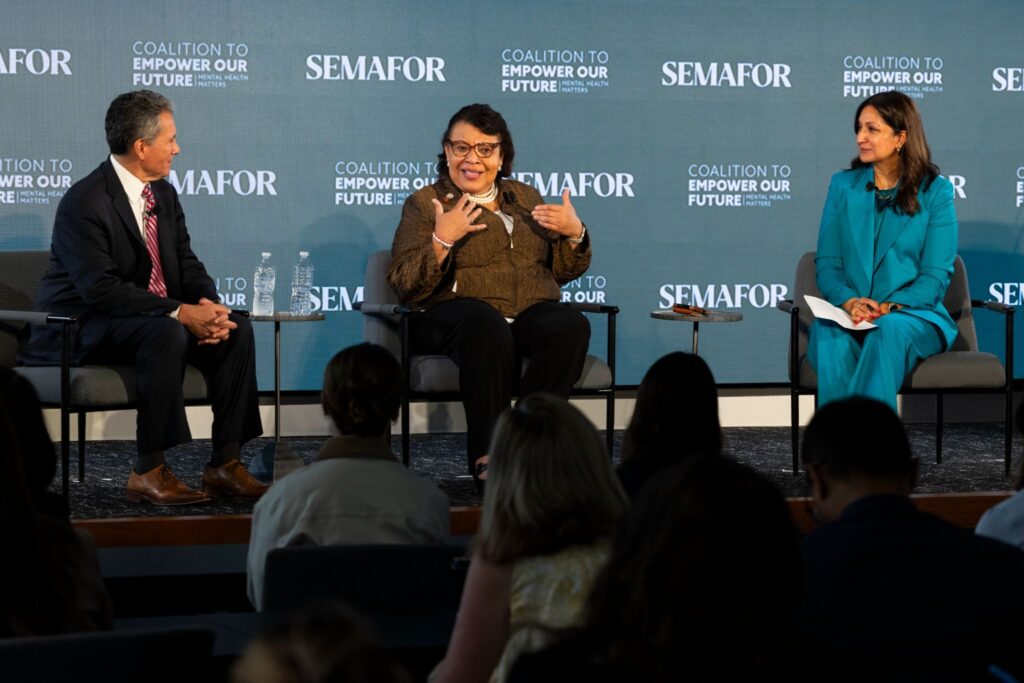
The “Schools Can’t Do It Alone” panel focused on the larger challenges facing schools and how educational spaces can support youth mental health. The conversation included Dr. Jaime Diaz-Granados, deputy CEO of the American Psychological Association (APA), and Princess Moss, president of the National Education Association (NEA), where they discussed the importance of empowering educators and their increasing role in addressing youth mental health challenges. Moss noted that “communities, including educators, know best what their students need,” and called for intentional conversations with those “on the ground and in the trenches” when developing meaningful solutions for young people.
Sofia Ong’ele, the director of strategy at Gen Z for Change and Dr. Jaspal Sandhu, president and CEO of Hopelab, discussed the importance of amplifying youth voices in conversations around youth mental wellbeing in a panel entitled “Who Gets To Design The Future?” The panelists emphasized how a healthy balance in social media use is essential, with Ong’ele noting that “[safeguards] should be done responsibly and should be done across the board.” Sandhu emphasized the importance of the recent agreement between the states and Meta to add new safeguards for young people online and how other platforms should follow suit, adding that the agreement was a step “in the right direction, but this is a much longer race.”
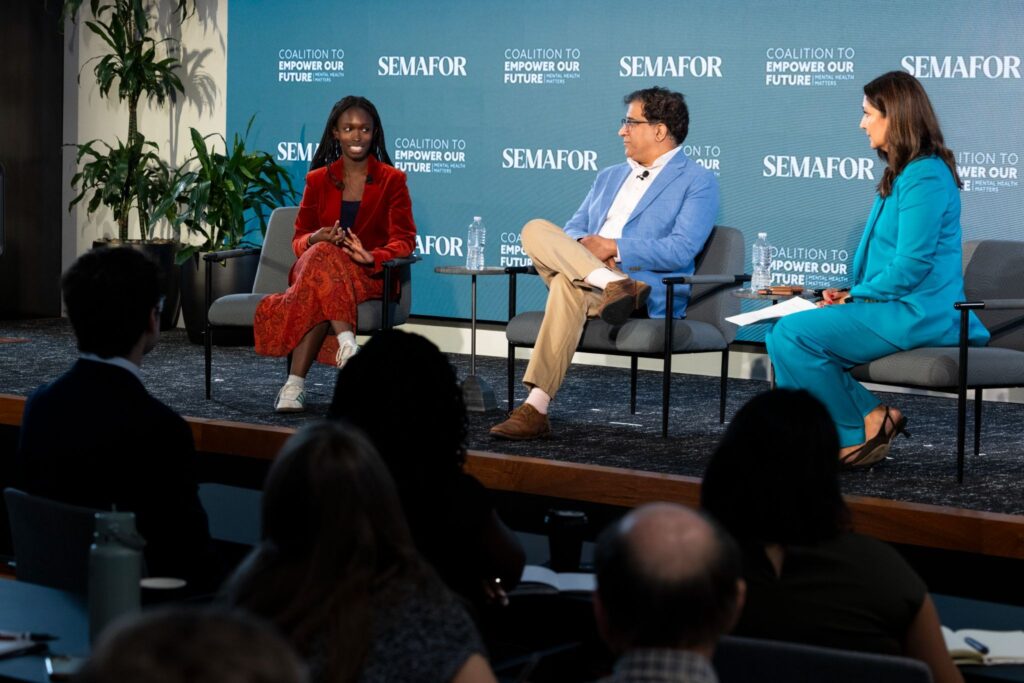
To conclude, the “New Front Door to Mental Health” panel focused on the growing role of technology as an initial entry point for accessing mental healthcare. The panelists, including Jaymes Black, CEO of The Trevor Project, Dr. Jon Kole, medical director and senior director of psychiatry at Headspace, and Nicole Hockley, co-founder and CEO of the Sandy Hook Promise, discussed how in an increasingly digital world, many young people have their first experience with mental health resources in online spaces, and highlighted the importance of making these spaces accessible and an appropriate bridge to further resources. Hockley noted that “The new front door to mental health may be digital, and that’s okay,” while Black added to this sentiment by saying, “Technology is here, we can’t ignore it, AI is here. Technology is the door, but it can’t be the entire house.”

The forum brought together a range of perspectives working to achieve a comprehensive approach to youth mental health. The panelists noted how recent developments, such as the new agreement between the states and Meta to advance online safeguards for young people, are important steps toward addressing the youth mental health challenge, but no one solution can suffice. As parents expressed in recent CEF research and panelists echoed onstage, a comprehensive approach to youth mental health and wellbeing also requires us to address the whole of a young person’s life with solutions such as tools to empower parents, creating consistency across platforms, increasing access to mental healthcare and providing mentorship opportunities, to name a few.
This work will continue to require a collective effort between parents, educators, mentors and community organizations to ensure that young people have the resources they need to succeed. The Coalition to Empower our Future is grateful for the wide range of voices that participated in the forum and hopeful that these conversations will continue to drive dedicated support to address this challenge.
Watch the full forum here.
###